Solar tint changes the balance of heat and light
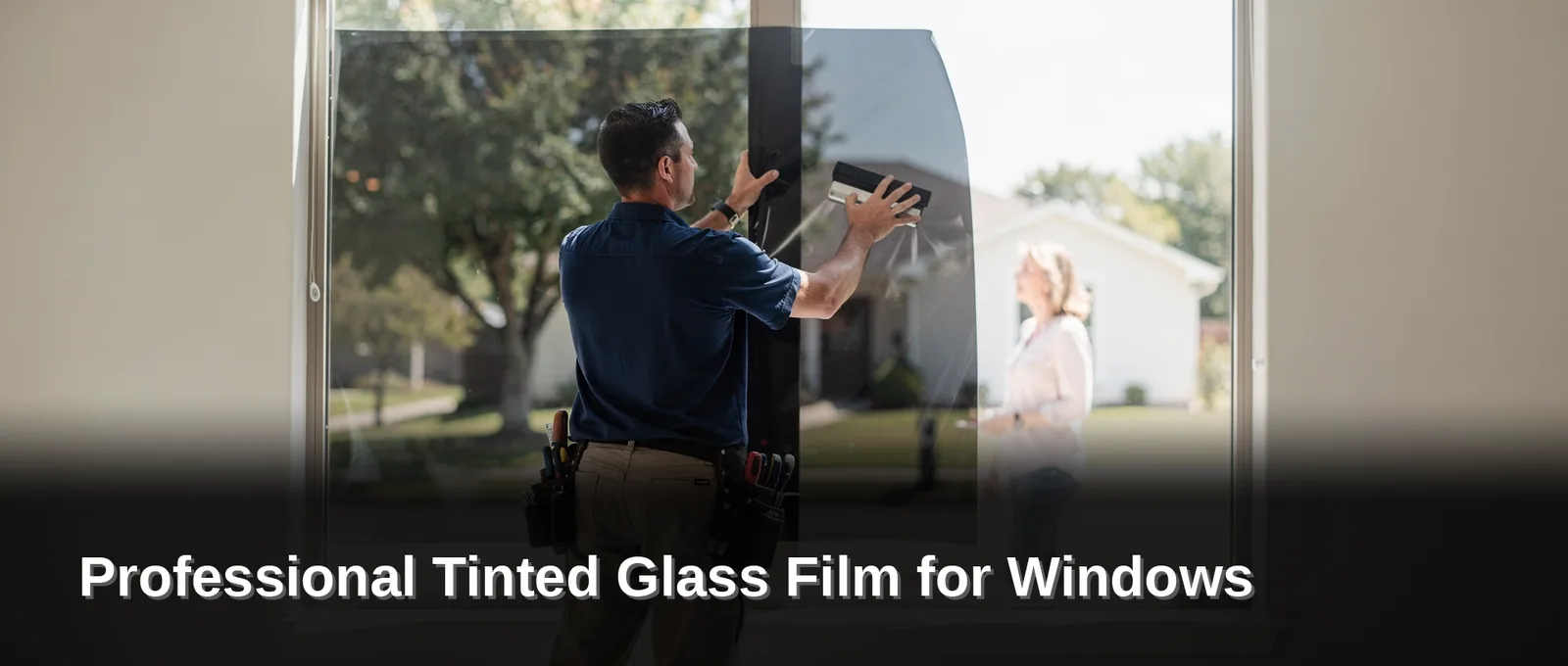
Solar control film can reduce solar heat entering through treated glass and help manage glare. Different films transmit different amounts of daylight and change exterior reflectivity to different degrees. Darkness alone is not a complete measure of heat performance. Compare the manufacturer's Total Solar Energy Rejected and Visible Light Transmission for the exact shade and stated test glass, keeping infrared rejection separate from total solar energy.
Do not turn a solar benefit into a blanket promise
Cooling demand and utility savings depend on the building, shading, orientation, cooling system and use of rooms. UV reduction can help address one cause of fading, but it does not eliminate fading. A solar product should not be described as a forced-entry, ballistic or storm protection system unless separate documentation supports the complete specified assembly. Keep comfort and protective performance as separate discussions.
Frosted film provides fixed visual separation
Decorative and frosted film can obscure views through all or part of an opening while admitting light. It also changes the outward view, and nearby shapes can remain visible depending on the design and lighting. For bathrooms, interior partitions and storefront graphics, review coverage and a physical sample before choosing a pattern. Fixed frost does not require switching power, but its suitability still depends on the product and surface.
Smart film changes appearance with power
Many switchable films use PDLC technology: the unpowered layer scatters light into a frosted appearance, and a compatible electrical field produces a clearer state. Confirm the actual operating states of the proposed product. The clearer state can have haze, and the frosted state is not automatically blackout or complete silhouette concealment. Power supplies, connections, permitted environment and controls belong in the installation plan. Privacy switching does not itself establish sound insulation, solar performance or security.
Match privacy to actual lighting
Reflective solar film can behave differently when a brightly lit interior faces a darker exterior. Do not depend on it for nighttime privacy. For a conference room or medical space, test samples from both sides under conditions similar to the room. The right question is what observers can see in those conditions, not whether a product is casually called one-way or smart glass.
Check the windows and define the scope
Existing low-E coatings, insulated units, laminated glass, damage and prior film can change product suitability. Request the exact film, installation side, preparation, pane list and applicable warranty in writing. Alpha Shield is a 3M Authorized Window Film Dealer in Magnolia; authorization is not a claim that every 3M product is available or suitable for every glass type. Request a project review at (346) 412-3141 or through the free estimate form.
Frequently Asked Questions
Is smart film the same as solar window tint?
No. Switchable film changes visual privacy with electrical power. Solar film is evaluated for solar heat, glare and visible light. A smart privacy function does not establish equivalent solar performance.
Does darker film always reject more heat?
Do not choose from darkness alone. Compare solar performance and visible light transmission for the exact product, shade and test glass, along with compatibility and appearance.
Will tinted film give me privacy at night?
Reflective solar film does not guarantee nighttime privacy. Review lighting conditions and discuss fixed privacy film or appropriate coverings where obscuring views is essential.
Continue planning
Explore related services
Sources & further reading
Last updated October 28, 2026