
Make a room-by-room list
Start with where discomfort occurs and when. Record sunny seating areas, screen glare, fading concerns and rooms needing visual privacy. Orientation, shading and existing glass all affect the discussion. A west-facing room may need different glare management from a bathroom needing fixed privacy. Choose a discussion priority for each group of windows before trying to choose one film for the entire house.
Match the category to the goal
Solar control film is the category to compare for heat and glare on exterior glass. Decorative or frosted film changes visibility through the treated area. Switchable privacy film needs a planned electrical system and should be sampled for haze and silhouettes. Safety and security film serves a separate broken-glass-retention goal and may require attachment to the frame. Ordinary solar film does not provide an assumed security or storm rating.
Review glass compatibility and appearance
Give the installer information about double-pane units, low-E coatings, existing film, damaged seals and the window manufacturer's warranty. Review physical samples under the room's lighting. Compare solar performance and visible light transmission for the exact film, shade and stated test glass. Infrared rejection is not total solar heat rejection. No product should be described as appropriate for all insulated, coated or laminated glass without checking its specific guidance.
Prepare the house for installation
Agree on access to each pane and who will move furniture or handle blinds and curtains. Protect fragile belongings and keep children and pets away from the work area. Mention existing film early so removal and cleanup are included in the scope. Confirm any high-window access and the intended installation side. The proposal should describe the panes, preparation, film and applicable warranty rather than only a material name.
What happens during the work
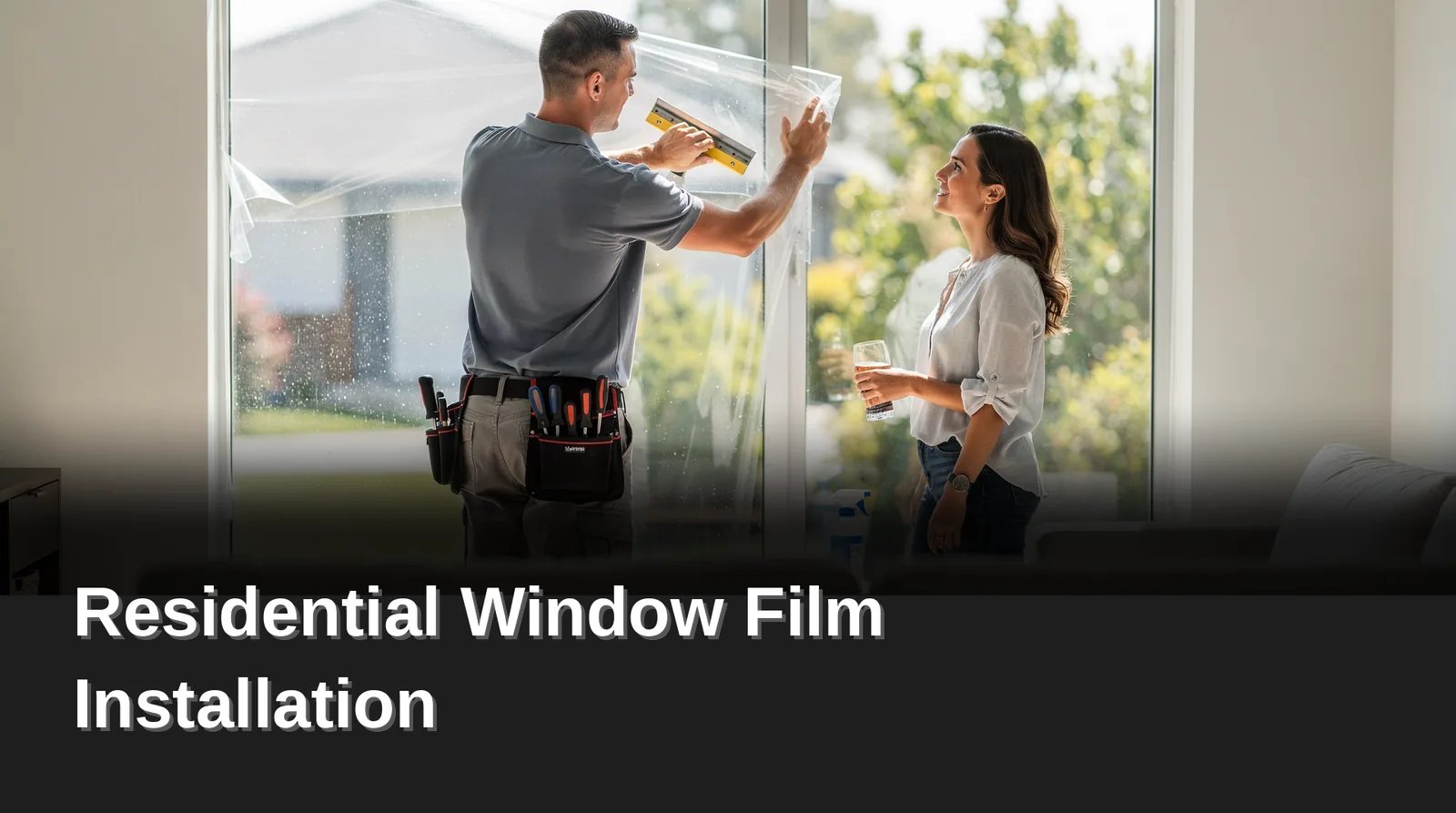
For many architectural films, the installer cleans suitable glass, positions the film with application solution, removes excess liquid and finishes edges. Methods vary by product and glass; this overview is not a blade, heat-gun or attachment instruction. Safety systems can involve additional frame work, and switchable film follows different requirements. Ask how the completed work will be inspected and which questions should be raised before handover.
Drying, cleaning and follow-up
Obtain written drying and cleaning intervals specific to the installed film and conditions. Some residual moisture may be visible while wet-applied film dries, but persistent or worsening concerns deserve review. Do not press or puncture the film. Use approved cleaners and soft, nonabrasive tools only when cleaning is permitted. Keep the product name, treated-window record, warranty and care instructions for future cleaners and for any glass replacement.
Arrange a local estimate
Alpha Shield by LeWolf serves home window film projects in Magnolia, Montgomery County and Greater Houston. Begin with your property location, approximate pane sizes and counts, known glass details and room priorities. Request an estimate or call (346) 412-3141. Final selection requires project-specific review; this guide does not establish an approved film recommendation, a fixed saving or a completed installation result.
Frequently Asked Questions
Will residential window film stop furniture from fading?
No complete prevention is promised. UV-reducing film can address one contributor to fading, but visible light, heat, exposure and the material itself also affect fading.
Can reflective window film replace blinds at night?
Do not rely on reflective solar film for nighttime privacy. When the room is brighter than outdoors, visibility conditions change. Discuss fixed privacy film or appropriate coverings for your room.
Can I clean my windows immediately after installation?
Follow the cleaning interval and tools specified for your installation. Drying varies by product and conditions; there is no universal next-day cleaning rule.
Continue planning
Explore related services
Sources & further reading
Last updated October 28, 2026