
Glare and daylight
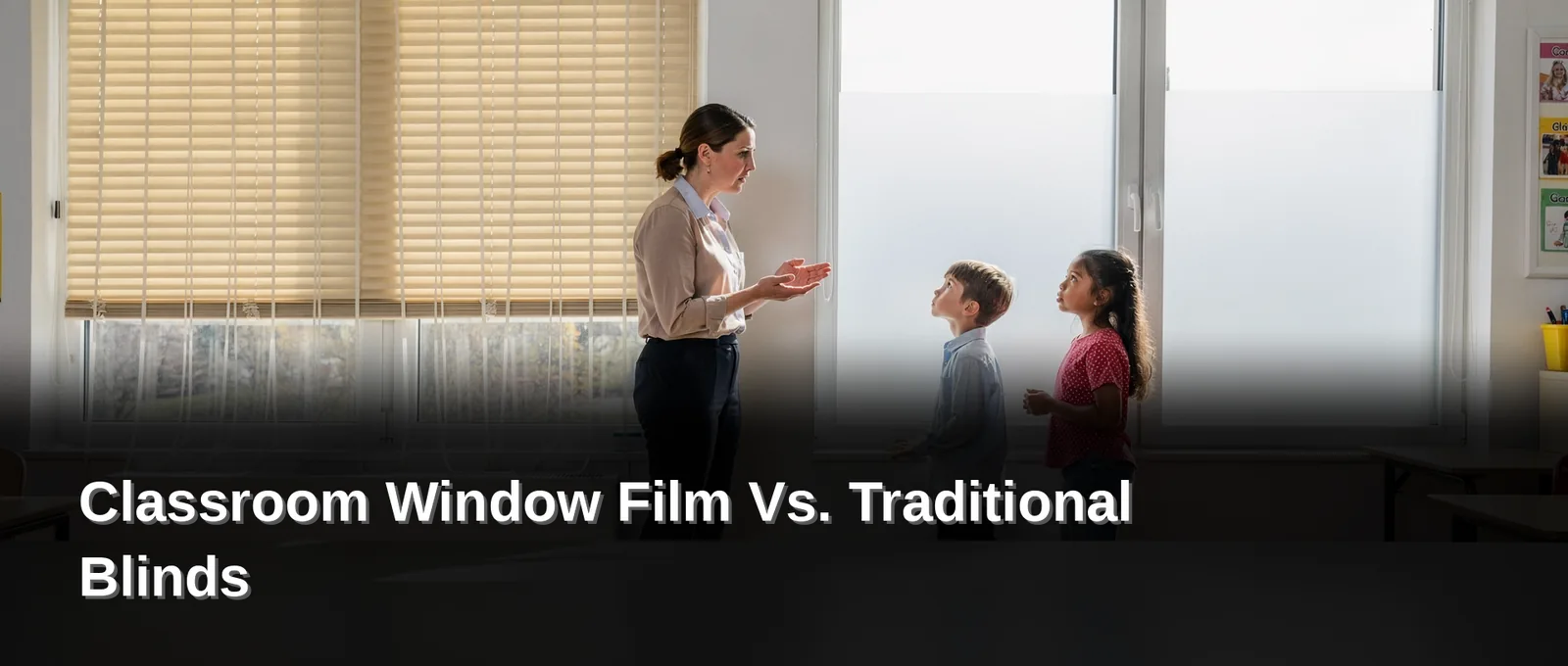
Blinds block light and view when closed. Solar film can reduce glare while keeping some daylight and outward view, depending on the product's visible light transmission. Classrooms with screens may benefit from film alone or film combined with shades.
UV and fading
Many window films reject a high share of UV under stated test conditions, which can help slow fading of materials. Fading has several causes, so no film eliminates it completely.
Cords and maintenance
Corded window coverings carry known hazards; districts should follow current Consumer Product Safety Commission guidance for any coverings they keep. Film has no cords or slats, though it still needs correct cleaning methods and eventual replacement.
Broken glass behavior
Blinds do not change how glass breaks. Safety and security film can help hold fractured glass together, and with a specified attachment system can help retain glass in the frame. It does not stop bullets or guarantee a specific delay.
Plan classroom glass with Alpha Shield
Alpha Shield is based at 5523 FM 1488, Suite C, Magnolia, TX 77354. Call (346) 412-3141 or use the school project request to discuss classroom goals.
Frequently Asked Questions
Should schools remove blinds after adding film?
Not necessarily. Many classrooms keep shades for blackout or privacy needs and add film for glare, UV or glass retention.
Does window film give privacy at night?
Reflective solar film generally does not provide nighttime privacy when interior lights are on. Use shades or a dedicated privacy film where that matters.
Is classroom security film bulletproof?
No. Ordinary safety and security film does not stop bullets.
Continue planning
Explore related services
Sources & further reading
Last updated October 28, 2026