
Separate planning from performance claims
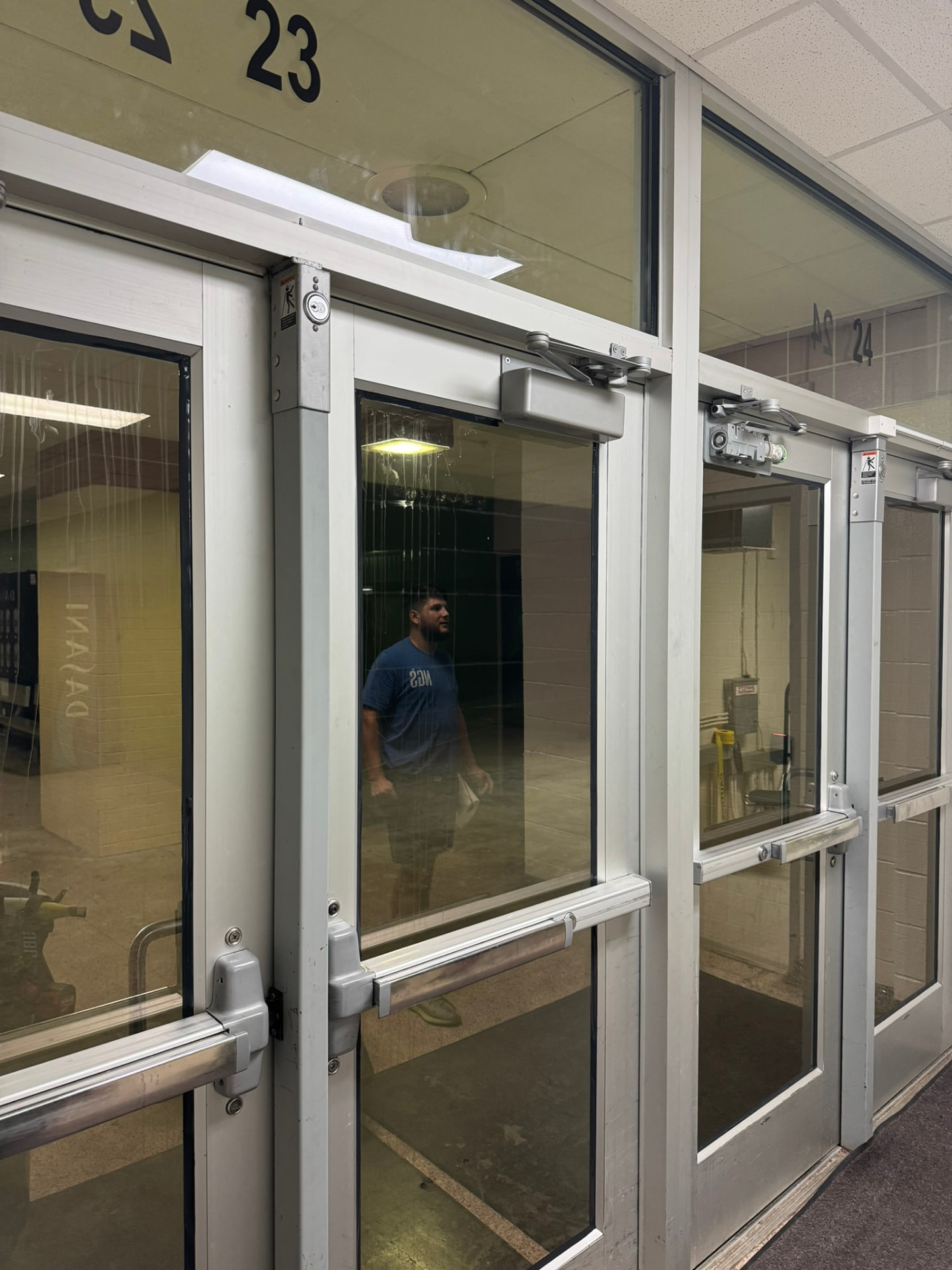
A campus photograph, film brand or thickness is not proof that a proposed opening meets a test. Request the exact product, current installation guidance and reports supporting any protective claim. Compare the complete tested assembly with the proposed glass and frame, and record differences. This article does not certify a campus, establish a named test rating or promise a specific entry delay.
Survey the openings before scheduling
Have district facilities and safety teams identify priorities using their assessment. Assign campus, building and opening IDs, then record dimensions, pane counts, known glass construction, existing coatings and frame or seal concerns. Damaged or unidentified glass needs review before installation. Share only non-sensitive summary information in the public school project form; detailed security plans belong in a controlled discussion with authorized district contacts.
Understand the two attachment relationships
Film bonds to the glass surface. A compatible attachment system may also be required to connect filmed glass to the frame and help retain a fractured pane in the opening. These are distinct parts of the system. Specify the manufacturer's requirements for the exact film, glass and frame. Do not substitute a generic perimeter detail or omit required attachment to simplify work or lower a quote.
Coordinate occupied buildings and campus phases
Discuss holidays, summer breaks or after-hours access early, then confirm availability and the assessed installation scope. Agree on room access, furniture clearance, work-area separation, crew movement and communication with campus staff. A multi-campus project needs a record of work by building and opening, not a promise of identical glass conditions or zero disruption. Schedule changes should be recorded alongside any scope changes.
Separate completion from readiness
Wet-applied film drying and attachment curing are product- and condition-specific. Installation completion may not mean readiness for the intended protective performance. Request written instructions covering drying, attachment curing, permitted cleaning and any return-to-service restrictions. Have the installer assess persistent edge, seal or appearance concerns rather than assuming all irregularities are temporary.
Keep a campus-by-campus handover file
Retain opening IDs, installed film and attachment identification, preparation records, applicable warranty information, care guidance and any relevant test documentation. Agree on how damage, replacement glass or edge concerns will be reported. Glass replacement can change compatibility and system assumptions; arrange review before reapplying film. Warranty terms depend on the specific product and installation, not on a general assertion of full coverage.
Discuss your district's scope with Alpha Shield
Alpha Shield is based at 5523 FM 1488, Suite C, Magnolia, TX 77354 and provides school project planning resources alongside its commercial and residential services. Begin with district contact information, campus counts, approximate opening counts and requested proposal documents. Call (346) 412-3141 or use the school project request. Confirm service coverage, schedule, funding and purchasing requirements directly; this guide does not establish nationwide installation capacity or cooperative-contract eligibility.
Frequently Asked Questions
Does school security film stop bullets?
Ordinary safety and security window film does not stop bullets. Any ballistic-resistance claim requires a separately specified, tested system and documentation limited to that complete assembly.
Can installation happen during breaks or after hours?
Discuss preferred access windows with the installer and district, then confirm availability, occupied-area separation and project-specific duration. No universal break-period completion or zero-disruption promise is made.
When can a school rely on the installed system's intended performance?
Obtain product-specific film drying, attachment curing and return-to-service instructions. Installation completion is not necessarily the same as readiness for the intended protective performance.
Continue planning
Explore related services
Sources & further reading
Last updated October 28, 2026